





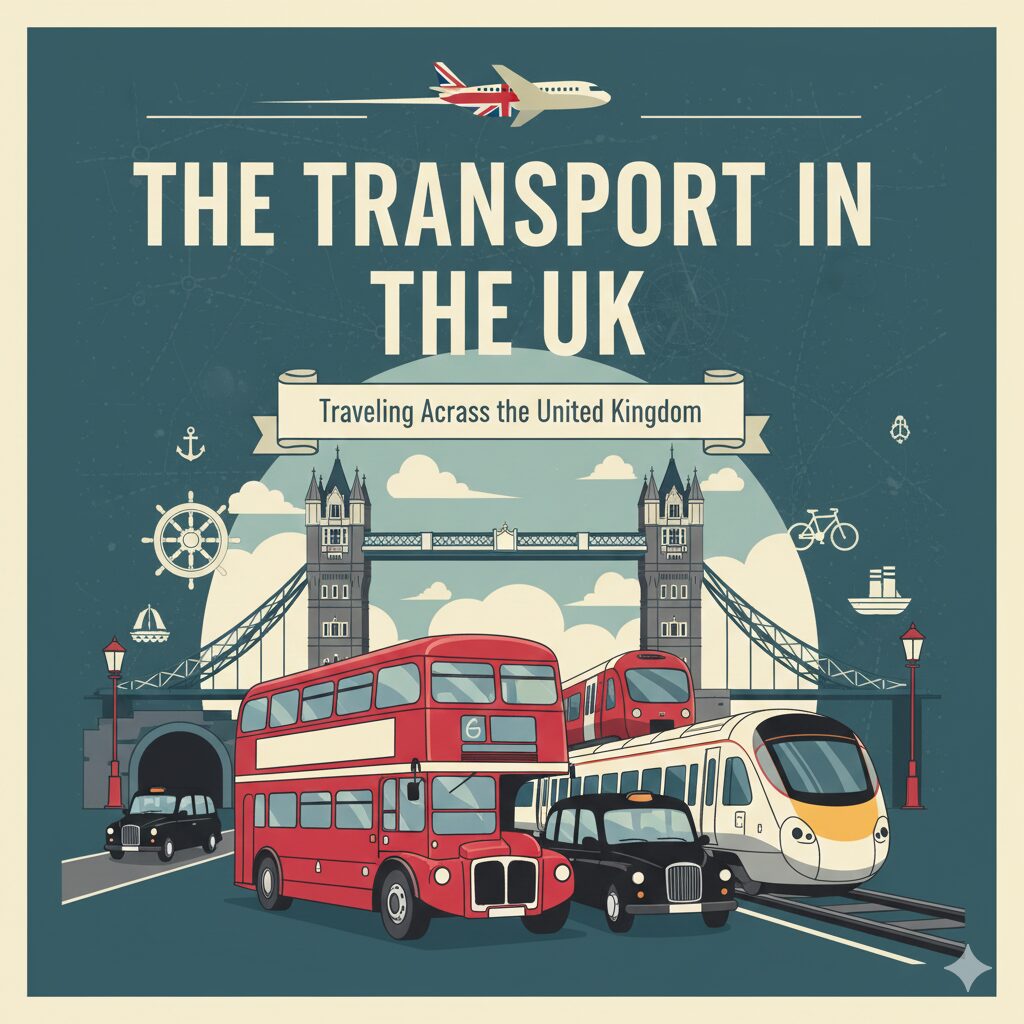
Getting around in the UK is generally easy, thanks to its wide range of transport options from buses, trains, and ferries to taxis, planes and of course driving your own car. The country’s transport network is well-developed, with reliable roads, modern railways, and plenty of airports connecting major cities and regions.
That said, the UK is quite densely populated, so traffic jams are pretty common, especially in busy cities like London. You might also find yourself in queues from time to time it’s just part of daily life here.
Driving during rush in big cities can be stressful, so is often more convenient to take public transport or even cycle if you can. Many people in cities choose these options to save time and avoid the hassle of parking.
Before you travel, it’s worth learning a few key things about how transport works in the UK. A little preparation can make your journey smoother and help you enjoy exploring this lively and well-connected country.
Roads Heart of Transportation
When it comes to getting around the UK, roads are truly at the heart of it all. They’re the most common and convenient way to travel, whether you’re heading to class, exploring a new city, or taking a weekend trip to the countryside. As an international student, having a basic understanding of how the road system works will make your journey much smoother. So let’s take a friendly drive through the UK’s road network.
The UK roads are generally divided into two main types: Major roads and Minor roads.
Minor Roads
These are the smaller roads often the winding lanes that take you through quiet villages or residential neighborhoods. You’ll hear them referred to a Rural “C” and “U” roads in the countryside, and Urban “C” and “U” roads in towns and cities. They make up most of the UK’s road network and are perfect for local travel, through they can be quite narrow and sometimes tricky to navigate if you’re not use to them.
Major Roads
These are the big, busy routes that connect towns, cities and regions. They include Motorways (the “M” roads such as the M1 or M25) and A roads which are split into different types Rural trunk, Urban Trunk, Rural principal, and Urban principal “A” roads. Motorways are the fastest way to travel long distances , while “A” roads serve as the main arteries of the country, linking important destinations across the UK.
Whether you’re driving to university, visiting friends, or exploring new places, understanding these road types will help you plan your routes better and travel with confidence.
Driving Laws and Speed Limits
If you plan to drive in the UK, it’s important to get familiar with the local traffic rules they’re there to keep every one safe. One of the first things to know is the speed limit. On motorways and dual carriageways, the maximum speed is 70 mph (113 km/h). Sticking to these limits isn’t just good practice breaking them can lead to fines or even more serious penalties.
Driving on the Left Side of the Road
Here’s something that might take a little getting used to: in the UK, people drive on the left side of the road. It might feel strange at first, especially if you come from a country where driving on the right is the norm. But don’t worry most international drivers adapt pretty quickly. Just take your time, stay alert, and pay close attention to road signs and lane markings.
As you explore, remember the basics know the road types, respect traffic laws, and keep with in speed limits. With a bit of care and confidence, you’ll soon be cruising comfortably and enjoying the stunning landscapes, historic towns, and lively cities that make the UK such a great place to drive.
Trains System in the UK
When you first arrive in the UK especially in bustling cities like London the traffic can feel a bit overwhelming. But don’t worry, even locals sometimes find it a little chaotic. With time, you’ll figure out the best ways to get around and soon travel like a true Brit.
One of the most convenient option>? Trains!
Travelling by train in the UK is often safer, more comfortable, and quicker than driving or taking the bus. It’s also surprisingly affordable If you plan ahead. For instance, a train journey from London to Brighton takes just about an hour, making it perfect for a day trip to the seaside. You can also buy travel passes or railcards that help you save money and skip the hassle of buying a new ticket for every trip.
The UK’s railway network isn’t just efficient it’s historic. In fact, it’s the oldest railway system in the world, and it still plays a huge role in everyday life. Whether you’re commuting to university, visiting friends, or exploring new cities, travelling by train is a great way to see the UK comfortably and conveniently.
Underground Railway and train Tickets
Several major UK cities have their own underground or metro system that make getting around quick and easy:
- London: The famous underground also known as ‘the Tube” is the oldest and one of the most extensive metro system in the world.
- Liverpool: Connected to the Merseyrail network, offering smooth travel across the city and nearby areas.
- Glasgow: The subway is small but efficient, perfect for getting around the city center
- Newcastle: The Tyne and wear Metro links the city with nearby towns, the airport, and the coast.
If you plan to travel by train often, it’s good to know about the different types of tickets available in the UK. Choosing the right one can save you time and money.
Advanced Tickets:
These are the cheapest options but you’ll need to book early. Advance fares are tied to specific trains, so they’re not flexible, but if you know your travel plans ahead of time, they’re great way to save.
Off-peak and Super Off-Peal Tickets:
If you can travel outside of rush hours (usually mid-morning, midday, or later in the evening), these tickets are cheaper. They’re ideal for students or traveller with flexible schedules.
Anytime Ticket:
As the name suggests, these tickets let you travel at any time of day. They’re the most flexible but also the most expensive so they’re best if you need to travel without worrying about time restrictions.
Season and Flexi Season Tickets
Perefct for regular commuters, these tickets allow unlimited travel between two stations for a set period (weekly, monthly, or even yearly). Flexi season options are great if you travel just a few days a week, offering better value for part-time commuters.
Oyster and Contact-less Payments
In London and some other cities, you can use an Oyster card or a contact-less bank card to pay for trains, buses, trams, and the underground. The system automatically caps your daily or weekly fare, making travel simple and cost-effective no need to buy a paper ticket every time.
Ranger and Rover Tickets
If you want to explore a particular region, these tickets allow unlimited travel within a set area for a day or more. Just check any restrictions on travel times before you go.
A quick tip
Always buy or tap in before boarding the train inspectors regularly check tickets, and travelling without one can lead to a fine.
With a little planning and the right ticket you’ll find travelling by train in the UK both easy and enjoyable.
Driving in the UK
At first, driving in the UK can feel a bit unusual after all you’ll be on the left side of the road, and the steering wheel is on the right. It might take a little time to adjust, but once you get used to it, driving here can be a really enjoyable experience.
The UK offers some truly beautiful driving routes, especially through the countryside. From rolling green hills to charming villages and coastal roads, there’s so much to see when you’re behind the wheel.
Driving is also a big part of daily life in the UK. In fact, about 73% of people travel by car, van or taxi, and nearly every household owns at least one vehicle. It’s no surprise, then, that most Britons have a driving licence for many, it’s simply the easiest way to get around.
Can I use Hometown Driving Licence?
If you’re planning to bring your own car to the UK, there are a few important steps to take before hitting the road. Your vehicle must meet the UK’s safety and environment standards, you’ll need official approval to confirm that it complies. If your car doesn’t meet these requirements, you won’t be permitted to drive it in the country.
When it comes to your driving licence, the rules depend on where it was issued. If you’re from a non-EU country, you can legally drive in the UK for up to 12 months using your existing licence. After that, you’ll need to go through the process of getting a UK driving license if you plan to continue driving.